Fertilizer is a kind of material which provides one or more kinds of plant essential nutrient elements, improves soil property and raises soil fertility level, and is one of the material bases of agricultural production. Mainly including ammonium phosphate fertilizer, a large number of elements water-soluble fertilizer, medium element fertilizer, biological fertilizer, organic fertilizer, multi-dimensional field can concentrate organic fertilizer.
Fertilizers are substances or mixtures containing essential nutrients that are applied to soil or plants to enhance their growth and productivity. They provide plants with the necessary elements required for optimal development, including nitrogen, phosphorus, potassium, and other micronutrients. Fertilizers can be either natural or synthetic, and they help replenish nutrient levels in the soil that may have been depleted due to continuous farming. By ensuring an adequate supply of micronutrients, fertilizers play a crucial role in improving soil fertility, increasing crop yield, and supporting sustainable agricultural practices.Fertilizers are necessary nutrients that help plants in the production of crops. Pests and diseases disturb groundwater and water bodies and reduce soil growth; magnesium and phosphorous are the nutrients required to enhance plant growth.
Increased crop yield:The primary advantage of using these plant nutrients is their ability to enhance crop yield significantly. Fertilizers provide essential nutrients like nitrogen, phosphorus, and potassium, which are crucial for the healthy growth of plants. These nutrients are the plant's needs that help in maximizing the development of leaves, flowers, and fruits, resulting in higher yields per unit area.
Improved soil fertility:Fertilizers play a crucial role in replenishing soil nutrients, which can become depleted over time due to continuous cultivation. They replenish essential elements, such as nitrogen, phosphorus, and potassium, promoting healthy soil fertility. Proper soil fertility allows for better water and nutrient absorption, creating an optimal environment for plant growth.
Faster plant growth and development:Fertilizers provide plants with readily available nutrients, ensuring rapid growth and development. This advantage is particularly beneficial in regions with short growing seasons, enabling farmers to maximize their crop production within a limited timeframe.
Nutrient balancing and soil ph regulation:Fertilizers aid in balancing soil nutrient ratios and regulating soil pH levels. Maintaining an optimal pH range is critical for nutrient uptake and overall plant health. By adjusting the pH level, fertilizers help create a hospitable environment for beneficial microorganisms, contributing to soil health.
Increased plant resistance to diseases and pests:Well-fed and healthy plants are more resistant to diseases and pests. Fertilizers bolster plant immunity, making them less susceptible to various pathogens and insect attacks. Healthy crops require fewer pesticides, leading to a reduction in the environmental impact associated with chemical treatments.
Adaptability to diverse crops:Fertilizers are adaptable to a wide range of crops, from staple food crops like rice, wheat, and maize to fruits, vegetables, and cash crops. Their versatility allows farmers to use fertilizers to support diverse agricultural practices.


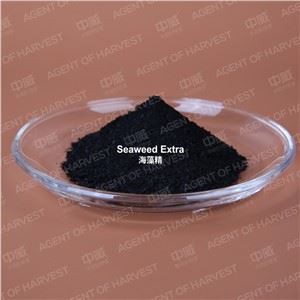
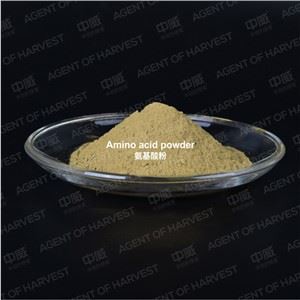


Our Service
Besides our existing molded products, our group and our research also can do the product as customer special demand, meet the oversea market demand. We control the product quality critically for every step during the manufacturing from custom. We offer technical support that is second to none.
Our Certificate
We regards product quality as the company life. We passed ISO9001, ISO14000:14001, China Quality, Service, and Credit AAA Enterprise.
Advanced Equipment
Scientific research center has 24 R&D personnel, more than 2,000 square meters of R&D experimental sites and 200 acres of experimental pilot test bases, equipped with advanced experimental equipment such as gas chromatographs, liquid chromatographs, and micrometers.
Our Products
Its products include plant growth regulators such as DA-6, atonik, GA3,NAA IBA, IAA, 6-BA, 6 KINETIN,CPPU,biofertilizer, mutual functional water-soluble fertilizer, lawn and garden care products, etc.
How Fertilizers Work
Fertilizers are food for plants. Just as we need an adequate and consistent diet to grow and stay healthy, plants and crops have to get proper nutrition from the soil to thrive.
Plants require a balanced supply of nitrogen, phosphorus, potassium, and sulphur. As plants extract these nutrients from the soil during every growing season, they must be replenished through fertilizers, manure, and compost added to fields or gardens annually.
The advantage of using fertilizers is they can be applied with more control to match crop needs and protect the environment. They can also supplement manure or compost to ensure the soil gets an adequate supply of nutrients. Fertilizer emphasizes the importance of managing and balancing the supply of nutrients to prevent both over and under fertilization.
Nitrogen: This element promotes rapid green, leafy growth. Too much can cause a plant to grow too fast or not produce the part of the plant that you are growing it for.
For example: Too much on a tomato may cause the plant to grow lots of green leaves and few flowers, delay fruit set and attract insects such as aphids. The same is true of flowering and ornamental plants.
Phosphorous: It stimulates early root growth and hastens blooming. Too much may be lost in the soil and wash into water ways.
Potassium: Increases resistance to drought and disease, and quality of seeds.
Calcium: Improves root formation and vigor, and helps regulate the uptake of other nutrients. A deficiency combined with insufficient water will result in blossom end rot of tomatoes.
Magnesium: Aids in chlorophyll formation and phosphorus metabolism. Regulates the uptake of other nutrients.
Sulfur: Imparts dark green color, stimulates seed production and formation of amino acids and vitamins.
Micronutrients: These are all necessary in tiny amounts, they work with the other nutrients to provide a balanced diet to all plants.
Commercial fertilizers
These are made from synthetically derived materials or are mined, and come in many different formulas depending on the suggested use of each product. There are many N, P, K combinations such as 16-16-16, 5-10-10 or 4-6-6 as examples.
They come in dry, liquid or slow release forms. Dry or liquid products are fast-acting and easily leached by rains. The slow-release products are not very good for the coast due to the fact that they usually are made to be released at abut 70º; soil temps rarely get that warm there.
Each package should tell you if the product has any minor nutrients. All commercial nutrients are available as single products.
There are many combinations made for specific uses such as lawn, rhododendron or vegetable "food." Some commercial ingredients are derived from sources that are becoming scarce.
The package should tell you how much to use by the square footage.
Organic fertilizers
The word "organic" refers only to things that are derived or harvested from once-living plants or animals.
The other minerals such as phosphorus, which can come from bone meal, potassium and the minor nutrients, are added and certified for use in organic growing. These frequently are produced in ways that do not damage the earth. They generally have lower N, P, K values than commercial products.
Dry types are slow acting, however they will feed your plants over a longer period of time.
All organic products are labeled as such. Organic approval comes from the oversight agency OMRI, the Organic Materials Review Institute, which certifies compliance with USDA Organic Standards and Practices. You will see the OMRI emblem on all store-bought products that are organic.


Liquid fertilizers
These can be either commercial or organic, and may be high or low in nutrient values. These are very fast acting and will give plants a quick boost.
They are especially useful when the soil is cold since dry organic products may not break down and become useful to plants until the soil warms. This is the time when liquids become especially valuable.
Liquids are also best when you are starting seeds or growing seedlings. Liquids are very valuable in midseason when plants need a boost and digging in more dry fertilizer doesn't work quickly.
Compost
For our purposes compost is organic matter that has been processed to create a useful product to add back to the soil. It is more difficult to quantify since nutrient values are unknown.
You can make your own using kitchen waste or yard debris. Commercially it is made of forest products, peat, coir, woody municipal debris, and possibly poultry and animal manure, or added nutrients. Commercial compost may contain artifacts such as pieces of plastic or rocks. Animal products typically contain "salts" that tend to build up and may be harmful in large amounts.
If the product is not completely composted it will use available nitrogen (N) in the soil to continue breaking down.
It is commonly available bagged or in bulk and makes a wonderful addition as a "soil conditioner" or side dressing.
When it comes to choosing which compost to buy, this is where you get what you pay for; the better the compost, the higher the price is likely to be.
In most cases, an all-purpose, 5-5-5 fertilizer will provide the nutrients all plants need for healthy growth. If a soil test reveals certain nutrient deficiencies, or if you want to tailor your fertilizer to the needs of particular plants (tomatoes vs. flowers), you can select a special formulation. What you choose will depend on your soil and what you are growing.
The three numbers that you see on a fertilizer label, such as 5-5-5, tell you what proportion of each macronutrient the fertilizer contains. The first number is always nitrogen (N), the second is phosphorus (P) and the third is potassium (K). This "N-P-K" ratio reflects the available nutrients by weight contained in that fertilizer. For example, if a 100-pound bag of fertilizer has an N-P-K ratio of 5-7-4, it contains 5 pounds of nitrate, 7 pounds of phosphate (which contains phosphorus), 4 pounds of potash (which contains potassium) and 84 pounds of filler.
Note that the N-P-K ratio of organic fertilizers is typically lower than that of a synthetic fertilizer. This is because by law, the ratio can only express nutrients that are immediately available. Most organic fertilizers contain slow-release nutrients that will become available over time. They also contain many trace elements that might not be supplied by synthetic fertilizers.
Ammonia is one nitrogen fertilizer component that can be synthesized from in-expensive raw materials. Since nitrogen makes up a significant portion of the earth's atmosphere, a process was developed to produce ammonia from air. In this process, natural gas and steam are pumped into a large vessel. Next, air is pumped into the system, and oxygen is removed by the burning of natural gas and steam. This leaves primarily nitrogen, hydrogen, and carbon dioxide. The carbon dioxide is removed and ammonia is produced by introducing an electric current into the system. Catalysts such as magnetite (Fe 3 O 4 ) have been used to improve the speed and efficiency of ammonia synthesis. Any impurities are removed from the ammonia, and it is stored in tanks until it is further processed.
While ammonia itself is sometimes used as a fertilizer, it is often converted to other substances for ease of handling. Nitric acid is produced by first mixing ammonia and air in a tank. In the presence of a catalyst, a reaction occurs which converts the ammonia to nitric oxide. The nitric oxide is further reacted in the presence of water to produce nitric acid.
Nitric acid and ammonia are used to make ammonium nitrate. This material is a good fertilizer component because it has a high concentration of nitrogen. The two materials are mixed together in a tank and a neutralization reaction occurs, producing ammonium nitrate. This material can then be stored until it is ready to be granulated and blended with the other fertilizer components.
To isolate phosphorus from phosphate rock, it is treated with sulfuric acid, producing phosphoric acid. Some of this material is reacted further with sulfuric acid and nitric acid to produce a triple superphosphate, an excellent source of phosphorous in solid form.
Some of the phosphoric acid is also reacted with ammonia in a separate tank. This reaction results in ammonium phosphate, another good primary fertilizer.
Potassium chloride is typically supplied to fertilizer manufacturers in bulk. The manufacturer converts it into a more usable form by granulating it. This makes it easier to mix with other fertilizer components in the next step.
To produce fertilizer in the most usable form, each of the different compounds, ammonium nitrate, potassium chloride, ammonium phosphate, and triple superphosphate are granulated and blended together. One method of granulation involves putting the solid materials into a rotating drum which has an inclined axis. As the drum rotates, pieces of the solid fertilizer take on small spherical shapes. They are passed through a screen that separates out adequately sized particles. A coating of inert dust is then applied to the particles, keeping each one discrete and inhibiting moisture retention. Finally, the particles are dried, completing the granulation process.
8 The different types of particles are blended together in appropriate proportions to produce a composite fertilizer. The blending is done in a large mixing drum that rotates a specific number of turns to produce the best mixture possible. After mixing, the fertilizer is emptied onto a conveyor belt, which transports it to the bagging machine.
Fertilizers are typically supplied to farmers in large bags. To fill these bags the fertilizer is first delivered into a large hopper. An appropriate amount is released from the hopper into a bag that is held open by a clamping device. The bag is on a vibrating surface, which allows better packing. When filling is complete, the bag is transported upright to a machine that seals it closed. The bag is then conveyored to a palletizer, which stacks multiple bags, readying them for shipment to distributors and eventually to farmers.
Greenhouse fertilizer storage areas contain relatively large quantities of concentrated chemicals. Risks in storage areas include release through broken, damaged, or leaking containers; loss of security leading to irresponsible use; accumulation of outdated materials leading to excessive quantity of fertilizer thus unnecessarily raising risk level; and combustion of oxidizing compounds in fertilizer (e.g., nitrates) caused by fire or another disaster event.
The least amount of risk involves having a building or area dedicated to fertilizer storage; separated from offices, surface water, neighboring dwellings and bodies of water; separate from pesticides and protected from extreme heat and flooding. The storage area should have an impermeable floor with secondary containment, away from plant material and high traffic areas. Clean-up equipment should be readily available.
Storage areas should not contain pesticides, or other greenhouse chemicals; storage areas may contain general greenhouse supplies; there should be no food, drink, tobacco products, or livestock feed present.
Provide pallets to keep large drums or bags off the floor. Shelves for smaller containers should have a lip to keep the containers from sliding off easily. Steel shelves are easier to clean than wood if a spill occurs.
If you plan to store large bulk tanks, provide a containment area large enough to confine 125 percent of the contents of the largest bulk container.
Keep the building or storage area locked and clearly labeled as a fertilizer storage area. Preventing unauthorized use of fertilizers reduces the chance of accidental spills or theft. Labels on the windows and doors of the building give firefighters information about fertilizers and other products present during an emergency response to a fire or a spill. It is a good idea to keep a separate list of the chemicals and amounts stored. If a fire should occur, consider where the water used to fight the fire will go and where it might collect. For example, a curb around the floor can help confine contaminated water.
Provide adequate road access for deliveries and use, and in making the storage area secure, also make it accessible, to allow getting fertilizers and other chemicals out in a hurry.
Never store fertilizers inside a wellhouse or a facility containing an abandoned well.


 English